

Char Dham Yatra Complete Travel Guide
27 Sep 2026
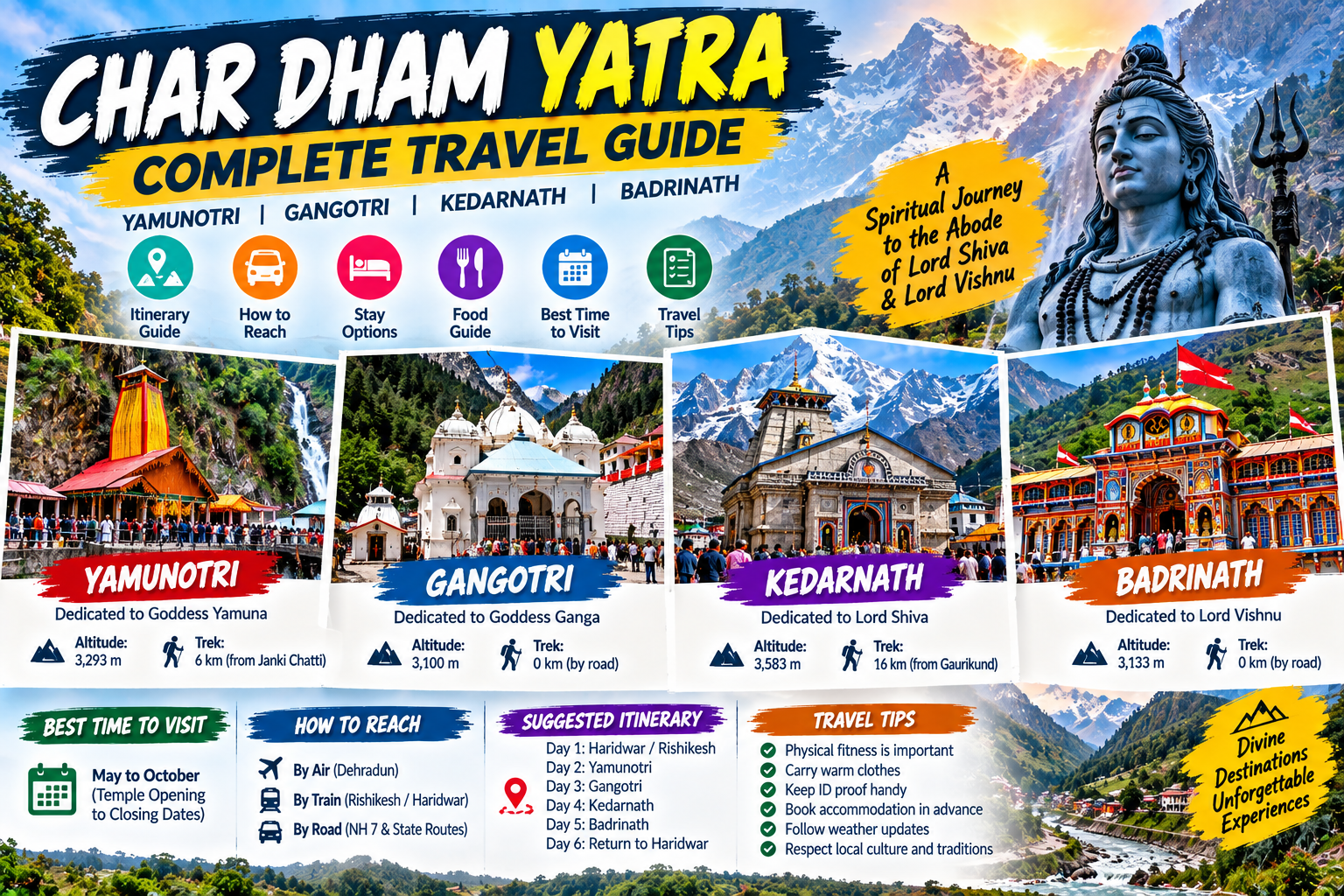
The Char Dham Yatra is one of India’s most important Hindu pilgrimages in the Himalayas. The traditional Char Dham circuit includes Yamunotri, Gangotri, Kedarnath, and Badrinath in Uttarakhand. This guide covers the route, best time to visit, registration, transport, accommodation, packing, safety, and practical travel tips.
What Is the Char Dham Yatra?
Char Dham refers to four sacred temples located in the Garhwal Himalayas. Pilgrims traditionally visit the shrines in this order: Yamunotri, Gangotri, Kedarnath, and Badrinath. The journey combines religious devotion with mountain landscapes, but it requires careful planning because of high altitudes, long road journeys, changing weather, and limited facilities in some areas.
Char Dham Yatra Route
- Yamunotri: Dedicated to Goddess Yamuna, this shrine requires a trek or local transport from the roadhead.
- Gangotri: Located near the source region of the Ganges, Gangotri is accessible by road and is surrounded by dramatic mountain scenery.
- Kedarnath: One of the most revered Shiva temples, Kedarnath requires a trek from Gaurikund or an approved helicopter or local transport option when available.
- Badrinath: Dedicated to Lord Vishnu, Badrinath is accessible by road and is usually the final shrine on the traditional route.
Best Time to Visit
The main pilgrimage season generally runs from late spring to autumn, subject to temple opening dates, weather, road conditions, and official advisories. May and June can be busy, while September and October often offer clearer conditions but colder weather. Avoid planning solely by calendar dates; verify the latest opening schedules and travel advisories before departure.
How to Reach the Char Dham Region
Most journeys begin from Haridwar, Rishikesh, or Dehradun. These places have road, rail, and air connections to varying degrees. From there, pilgrims generally continue by road through the mountain towns and designated route points. Travel times can change significantly because of traffic, landslides, weather, road repairs, and pilgrimage crowds.
Registration and Permits
Pilgrims may need to complete official yatra registration and obtain route or temple access permissions. Requirements can change each season, so use official government or tourism sources to confirm registration rules, identity documents, health requirements, booking procedures, and any daily visitor limits before travelling.
Suggested Itinerary
A comfortable itinerary commonly takes around 10 to 12 days, depending on the starting point, transport, rest days, weather, and road conditions. Allow extra time for acclimatization and unexpected delays. A typical plan includes Haridwar or Rishikesh, Barkot and Yamunotri, Uttarkashi and Gangotri, Guptkashi or Sonprayag and Kedarnath, followed by Joshimath and Badrinath before returning.
Travel Options
- Road trip: Flexible for families and groups, but mountain roads require patience and experienced drivers.
- Shared transport: Often more economical, although schedules and comfort can vary.
- Helicopter services: Available on selected routes and subject to weather, regulation, availability, and official operators.
- Trekking: Required or commonly used for sections such as the approach to Yamunotri and Kedarnath. Assess your fitness before choosing this option.
Accommodation and Food
Accommodation ranges from hotels and guesthouses to dharamshalas, camps, and government or community facilities. Book early during peak season, especially near Kedarnath and Badrinath. Food options are usually simple vegetarian meals, tea, snacks, and packed food; carry suitable snacks if you have dietary requirements.
What to Pack
- Warm layers, waterproof outerwear, comfortable walking shoes, and extra socks.
- Personal medicines, a basic first-aid kit, sunscreen, sunglasses, lip balm, and a reusable water bottle.
- Government-issued identification, registration details, booking confirmations, and emergency contacts.
- Power bank, flashlight, small backpack, personal hygiene items, and weather-resistant bags.
- Lightweight clothing suitable for temple visits and respectful local customs.
Health and Safety Tips
- Build your fitness gradually and walk at a steady pace, especially on uphill sections.
- Give yourself time to adjust to altitude and do not ignore headaches, breathlessness, dizziness, or unusual fatigue.
- Keep medicines and important documents accessible, and travel with someone whenever possible.
- Follow instructions from local authorities, temple staff, medical teams, and transport operators.
- Check weather, road status, and official advisories before each leg of the journey.
- Do not trek or drive during unsafe conditions, and avoid overcrowded or unauthorized transport.
Responsible Pilgrimage
Keep the Himalayan environment clean by avoiding single-use plastic, carrying waste until you find a proper disposal point, saving water, and respecting wildlife. Dress modestly, follow temple rules, ask before photographing people, and support local businesses responsibly.
Important Planning Checklist
- Confirm temple opening dates and daily visiting arrangements.
- Complete the required registration before starting the journey.
- Reserve transport and accommodation with reliable, authorized providers.
- Share your itinerary and emergency contacts with family or friends.
- Keep buffer days for weather, traffic, road closures, and rest.
- Carry cash as card or mobile payment availability may be limited in remote areas.
Final Thoughts
The Char Dham Yatra can be a deeply meaningful experience when approached with preparation, patience, and respect for the mountains and local communities. Plan conservatively, verify current official information, and make safety the priority throughout the journey.