

Top Wildlife Sanctuaries and National Parks in India
27 Sep 2026
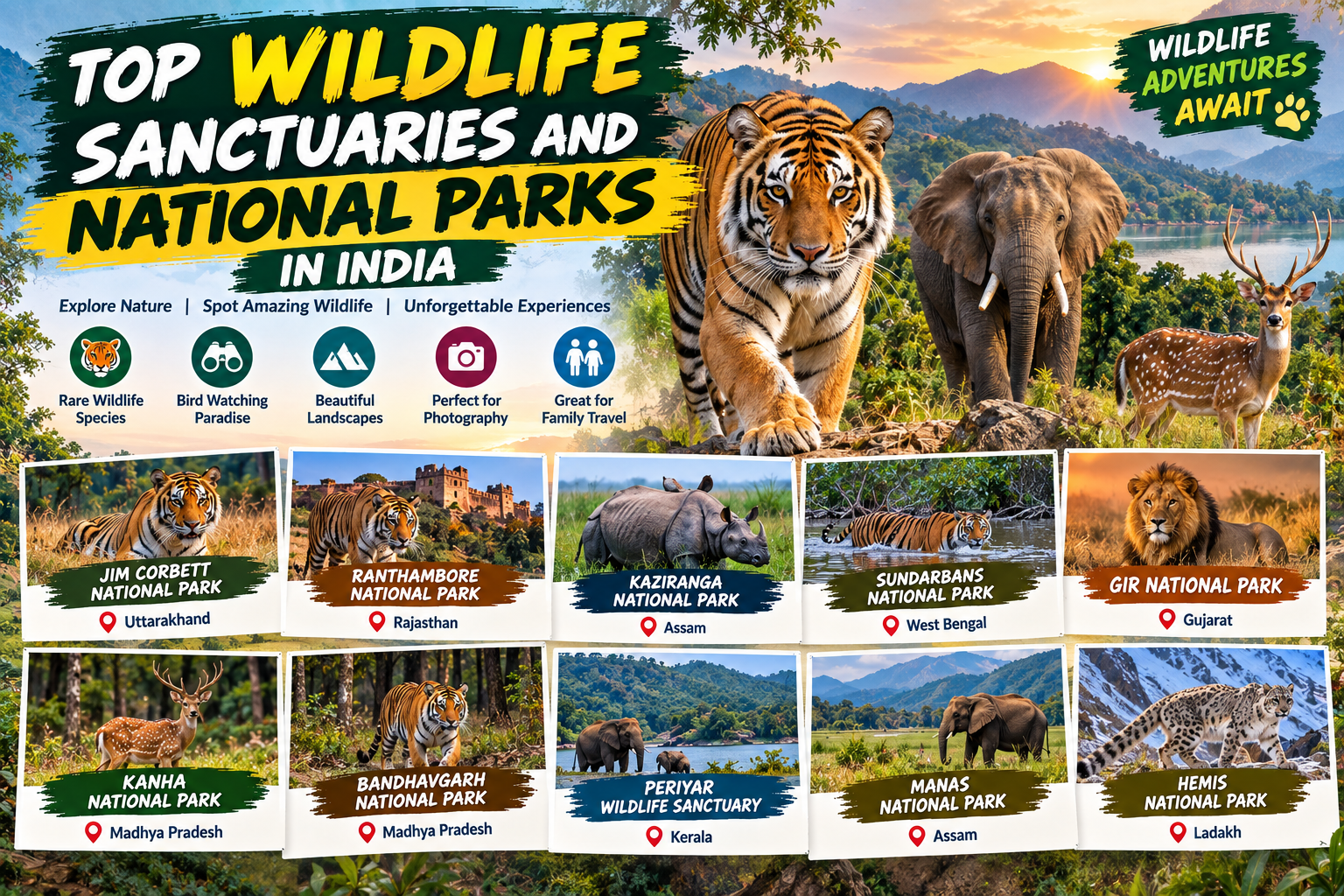
India is home to an extraordinary variety of landscapes and wildlife, from the Himalayan mountains and northeastern forests to the deserts of Rajasthan and the tropical coastlines of the south. Its national parks and wildlife sanctuaries offer travelers the chance to see majestic animals, rare birds, and beautiful natural habitats while learning about conservation.
1. Jim Corbett National Park, Uttarakhand
Jim Corbett National Park is one of India's best-known wildlife destinations and a popular place to look for Bengal tigers. The park features forests, grasslands, rivers, and hills that support elephants, leopards, deer, birds, and many other species. Jeep safaris and guided nature experiences are popular ways to explore the reserve.
2. Ranthambore National Park, Rajasthan
Ranthambore is famous for its tiger sightings and dramatic scenery. Ancient ruins, lakes, dry forests, and open grasslands create a memorable safari setting. Besides tigers, visitors may see leopards, sloth bears, crocodiles, sambar deer, and a wide range of birds.
3. Kaziranga National Park, Assam
Kaziranga is a UNESCO World Heritage Site and one of the most important habitats for the greater one-horned rhinoceros. Its wetlands and grasslands also shelter elephants, wild water buffalo, swamp deer, tigers, and numerous migratory and resident birds.
4. Kanha National Park, Madhya Pradesh
Kanha's sal forests, meadows, and streams provide a beautiful setting for wildlife viewing. The park is known for Bengal tigers, barasingha deer, leopards, wild dogs, gaur, and rich birdlife. Its conservation work has helped protect important species and habitats.
5. Bandhavgarh National Park, Madhya Pradesh
Bandhavgarh combines dense forest, open meadows, and historic landscapes. It is widely regarded as one of India's notable tiger habitats. Visitors may also encounter leopards, deer, sloth bears, langurs, and many species of birds during guided safaris.
6. Gir National Park, Gujarat
Gir is the last natural home of the Asiatic lion. The dry deciduous forests and rocky hills also support leopards, striped hyenas, marsh crocodiles, antelope, deer, and diverse bird species. A guided safari is the best way to explore the area's wildlife responsibly.
7. Periyar National Park, Kerala
Located in the Western Ghats, Periyar is known for its scenic lake, evergreen forests, elephants, and rich biodiversity. Boat trips, guided walks, bamboo rafting, and other nature activities offer different ways to experience the protected landscape.
8. Sundarbans National Park, West Bengal
The Sundarbans is a vast mangrove ecosystem shaped by tidal waterways. It is famous for its elusive Royal Bengal tigers and also supports crocodiles, spotted deer, fishing cats, and many birds. Because conditions can be challenging, visitors should follow local guides and park regulations carefully.
9. Great Himalayan National Park, Himachal Pradesh
This protected mountain landscape is known for alpine meadows, deep valleys, and high-altitude biodiversity. Trekkers may encounter species such as the Himalayan tahr, musk deer, monal, and, with rare sightings, the elusive snow leopard.
10. Hemis National Park, Ladakh
Hemis is one of the best-known places in India to search for the snow leopard. Its rugged terrain, high-altitude valleys, and sparse landscapes also support blue sheep, ibex, marmots, and Himalayan birds. Wildlife trips here require preparation for cold weather and high elevations.
Tips for planning a wildlife trip
- Check the best season, park opening dates, and safari zones before booking.
- Reserve permits, safaris, and accommodation in advance during busy periods.
- Follow the instructions of forest officers and trained naturalists.
- Keep a safe distance from animals and never feed or call out to wildlife.
- Carry suitable clothing, binoculars, water, sun protection, and essential medicines.
- Choose responsible operators that respect local communities and conservation rules.
Conclusion
From tiger reserves and mangrove forests to high-altitude parks and lion habitats, India's protected areas offer remarkable experiences for nature lovers. Responsible travel helps preserve these ecosystems and ensures that future generations can continue to enjoy the country's incredible wildlife.